

When I first started exploring online casinos, I continued to hear the term “payout percentage” and I have to admit it felt like an abstract number that only statisticians should care about. Over time, I came to understand that understanding payout percentages is one of the most practical tools any player can have, whether you are playing a slot machine or placing a bet at the blackjack table. At Wincleo Casino, I have found that taking a few moments to check the return to player information transforms the way I tackle my entire session. This is not about guaranteeing a win; it is about knowing what the mathematical framework of a game involves, so you can make informed choices that fit your personal style and budget. In this article, I want to walk you through everything I have learned about casino payout percentages, from the basic definitions to the way these numbers affect bonuses, volatility, and the real-world experience at a modern casino like Wincleo. My goal is to give you a complete, practical guide that you can use right now, without any fluff or vague promises.
The Core Idea: What Payout Percentages Actually Represent
A payout percentage, which you will often see labelled as RTP or Return to Player, is the theoretical amount a game is intended to pay back to players over a very large number of rounds https://wincleo.com.nl/. If a slot machine has a 96% RTP, the mathematical model states that for every 100 units wagered in total by all players over millions of spins, the machine will give back 96 units on average. The leftover 4 units represent the house edge, that is the casino’s built-in margin. The essential detail I always remind myself is how this is a long-run mathematical mean, not an immediate guarantee for a single session. As I begin to spin a slot at Wincleo Casino, I could end up with a big win after only a few spins, or I could lose my entire deposit; neither scenario contradicts the 96% RTP because the statistic only becomes accurate over a huge data set. I find it helpful to think of RTP as a directional tool rather than a map. It tells me the overall trend of the game’s generosity, but it does not predict the journey I will take tonight. This insight saved me from the annoyance of expecting a slot to “pay back” a certain amount within a fixed timeframe, and it helped me view every session as a source of fun measured against a familiar statistical framework.
Short-Term Results Versus the Long-Term Curve
The gap between a a solo session’s results and the theoretical RTP is where many misconceptions dwell. If I play a slot with a 97% RTP and finish the session down 30 units, I am not encountering a broken game; I am simply facing the inherent variance that is built into every casino product. The mathematical model ensures that the RTP will only show itself after hundreds of thousands, or even millions, of rounds, and my session is a tiny drop in that ocean. At Wincleo Casino, I have come to understand to embrace that while RTP is a reliable indicator of a game’s overall fairness, my own results are influenced much more by luck and the timing of my betting decisions. This is why I always determine a budget before I open a game, and I never pursue a loss expecting the RTP to “correct” itself in the next hour. The casino’s games are verified by independent labs to verify that the programmed RTP exactly matches the real-world performance over time, but that confirmation is a comfort about the system’s integrity, not a plan of when I will get my money back. Maintaining that distinction clear in my mind has made me a much more at ease and disciplined player.
Volatility: Why RTP Alone Doesn’t Show the Whole Story
Even when two slots have the identical RTP, my experience playing them can be totally different because of volatility, which is also called variance. Volatility describes how the payouts are distributed over time. A low-volatility slot will provide frequent but comparatively small wins, keeping my balance quite stable and allowing me to play for longer without dramatic swings. A high-volatility slot, on the other hand, will have long dry spells punctuated by occasional large payouts, and the RTP is still the same 96% over millions of spins. I have realized that understanding volatility is just as important as checking the RTP, because it directly influences my emotional and financial tolerance during a session. At Wincleo Casino, I can often get a sense of a slot’s volatility by reading the game description or by testing it in demo mode, and some providers even label their games as low, medium, or high variance. When I am in the mood for a government.nl casual session with a modest budget, I lean toward low-volatility slots; when I am willing to take a greater risk for a shot at a significant win, I choose a high-volatility game. Matching volatility to my bankroll and my temperament has been one of the most effective steps I have taken to improve my overall enjoyment.
Why Licensing and Auditing Are the Core of Payout Fairness
The statistics I have been mentioning are only relevant if they are upheld by a system that confirms the games operate as intended. This is where the licensing and auditing framework of a casino like Wincleo becomes essential. Wincleo Casino operates under a license issued by a recognized international gambling authority, which imposes strict rules about game fairness, player fund protection, and responsible conduct. Part of the licensing requirement is that the casino must submit its games to regular audits by approved testing agencies. These audits check that the RTP of the live games corresponds to the theoretical models and that the random number generators are working accurately. I have seen audit certificates that show the aggregate payout percentage across all slots or all table games over a given period, and while these composite numbers are less useful for individual game selection, they confirm that the casino is operating within the expected statistical range. The existence of a valid license also provides me with a channel for dispute resolution if I ever suspect a payout irregularity. Understanding that Wincleo is held to these standards allows me to concentrate on the gameplay itself, instead of fretting over whether the advertised RTP is an accurate representation of the odds.
How Return to Player (RTP) Gets Calculated and Audited

RTP is not a value that the casino makes up on the spot; it is programmed into the game’s software by the developer and then checked by accredited testing agencies. When a studio like NetEnt, Play’n GO, or Pragmatic Play creates a slot, its mathematical model is constructed around a specific RTP that the game will provide over the infinite lifetime of the product. The developers run billions of simulated rounds to verify that the theoretical payout matches the target percentage. Once the game is ready, an independent testing laboratory such as eCOGRA, iTech Labs, or GLI will audit the code and the random number generator to guarantee that the RTP is accurate and that the results are truly random. When I spin at Wincleo Casino, I realize that the games I access have undergone this kind of scrutiny because the operators only collaborate with licensed developers who send their products for certification. The casino itself is unable to alter the RTP of a game on a whim, and the settings are fixed by the provider. This is a critical layer of protection that gives me confidence that the 96.5% RTP I see on a slot’s information page is not merely a marketing slogan but a verified mathematical reality.
The Function of Testing Laboratories
Certification bodies do more than just examine the RTP number; they examine the entire randomness engine that drives every spin, card deal, or dice roll. I have reviewed audit reports from companies like iTech Labs, and they demonstrate that the output of the random number generator must be statistically indistinguishable to true randomness across millions of data points. For a player, this means that no moment in the game is influenced by previous results, and the advertised RTP is the only bias that persists. When I access the Wincleo Casino site, I can usually find the logos of these testing agencies either in the footer or on the fairness page, and sometimes individual games feature a certificate that I can click to check the latest payout verification. This transparency is something I seek in any casino, and it is one of the reasons I feel comfortable suggesting that others review the available audit information before they begin gaming. The knowledge that an external body has verified the math erases the suspicion that the game is somehow stacked against me in a way that goes beyond the stated house edge.
The Reason RTP Is Not a Dynamic Setting
Among the most enduring myths I run into is the idea that a casino can remotely adjust a slot’s RTP according to the time of day or the player’s activity. I can state with certainty that in a duly authorized and verified environment, this is not possible. The RTP configuration is integrated within the game’s firmware or server-side code, and changing it would require a full recertification process that involves the testing labs and the regulatory body. At Wincleo Casino, which operates under a recognized gambling license, the games act just as the developers intended, and the RTP remains fixed. What can happen is that the same game title might be present in different RTP variants based on the operator’s market and agreement, but the version presented to me is the one that has been examined and certified for that specific site. This is why I always verify the game’s help file or information screen for the exact RTP, because it is the ultimate authority on what I can expect from the mathematical model.
The House Advantage: The Flip Side of the Payout Coin
Every time I talk about payout percentages, I also always explain the concept of house edge, because the two are closely linked. The house edge is simply 100% minus the RTP, and it reflects the casino’s statistical advantage on every bet. If a game has a 96% RTP, the house edge is 4%. This does not imply the casino takes 4% of my deposit directly; it means that over the lifetime of the game, the operator will hold 4% of all money wagered, while the rest is given back to the player pool. At Wincleo Casino, the house edge is the price I pay for the entertainment, much like the margin a bookmaker builds into a sports bet. What I find remarkable is how dramatically the house edge can vary between games. On a European roulette wheel, the single zero gives the house an edge of about 2.70%, while the American double-zero version pushes that edge to 5.26%. In blackjack, when I use basic strategy, the house edge can drop below 0.5%, making it one of the most player-friendly games in the entire casino. Understanding the house edge helps me manage my bankroll more efficiently because I can choose games that give my money a longer expected lifespan, and I can avoid the less favourable variants that steadily drain my balance faster.
Progressive jackpot slots and Their Impact on Long-Term Returns
Progressive jackpot titles are the glittering attractions that offer life-changing sums, but their payout structure needs a more careful reading. In a progressive jackpot slot, a small portion of every bet is channeled to fund the jackpot pool, which means the base game return rate is often lower than that of a regular slot. I might see a progressive title with a stated RTP of 92% or 93% for the main game, while the remaining percentage is accounted for by the jackpot contribution. The combined theoretical RTP, including the jackpot, could still be in the 95% to 96% range, but that higher number is only achieved by the fraction of players who actually hit the top prize. For the great majority of sessions, the actual return is more aligned with the lower base number. When I play progressives at Wincleo Casino, I keep this understanding clearly in mind. I am not simply picking a game; I am buying a lottery ticket bundled into a slot machine, and I recognize that the normal gameplay will be less generous in return for the remote chance of a massive payout. I also verify whether the jackpot has a must-hit feature, which ensures the prize will be paid out before a certain amount or time, as this can marginally affect the expected value equation. In any case, I view progressive jackpots as a special treat instead of a key part of my money management strategy.
Procenta výher Napříč Různých Game Types
Ne všechny casino herní tituly jsou stejné when it comes to payout percentages, a jedna z nejlepších věcí, kterou jsem udělal when I started playing na Wincleo Casinu was to learn the typical RTP ranges pro každou kategorii. Slots can vary enormously, přičemž některé vysoce volatilní tituly se pohybují kolem 94% a další přesahují 98%. Stolní hry jako blackjack, baccarat, and certain video poker variants často poskytují RTP nad 99% při použití optimální taktiky, kdežto verze v live casinu of these games retain the same mathematical advantages s dodatečným napětím od skutečného krupiéra. Klíčové je, že payout percentages nejsou jednotné číslo attached to the whole casino; jsou realitou hru od hry. Když se přihlásím do svého Wincleo účtu, mohu procházet lobby automatů and look for the information icon které zobrazí RTP každé hry, a pro stolní hry mohu zkontrolovat nabídku pravidel pro zjištění přesné výhody casina. Tato transparentnost mi umožňuje sestavit herní seanci která balancuje hodnotu zábavy s matematickými kurzy přizpůsobenými mým cílům. Obvykle kombinuji pár kol blackjacku s vysokým RTP s hraním na vizuálně působivém automatu that carries a slightly lower payout, because I factor the enjoyment of the graphics and features do svého celkového rozhodnutí.
Automaty: Různorodost hodnot RTP
Slots are the lifeblood of any online casino, and at Wincleo Casino I have access to hundreds of titles that span a huge RTP scale. Classic three-reel slots can sometimes have RTPs in the lower 90s, while modern video slots from providers like NetEnt and Play’n GO frequently land in the 96% to 97% range. I have also found slots that advertise RTPs of 98% or higher, and these are often highlighted in the game description because they are a genuine selling point. The RTP figure for a slot is usually displayed in the paytable or in a dedicated information section, and I make it a habit to check this number before I place my first spin. The RTP includes all the game’s features, including the base game, free spins, and bonus rounds, so the excitement of a bonus round does not come at the expense of the overall payout fairness. Because slots are purely chance-based, I cannot influence the RTP through my choices, but I can choose a game that matches my comfort zone. A lower RTP slot might still be worth playing if I love the theme and the bonus structure, as long as I go in with my eyes open.
Pit Games: Where Skill Meets Return
When I move to the table games area at Wincleo Casino, I enter a world where my moves directly influence the payout percentage I encounter. The prime example is blackjack, where the house edge can be as low as 0.5% if I apply a sound basic strategy chart. That indicates the theoretical RTP reaches 99.5%, which is remarkably high versus the average slot. Baccarat also features a low house edge on the banker bet, around 1.06%, while European roulette stands at a steady 97.3% RTP. I have discovered that the specific rules of a table game variant matter a great deal. For illustration, a blackjack table that pays 3:2 for a natural blackjack has a much better payout structure than one that pays 6:5, and I always review the table rules before I sit down. At Wincleo, the digital table games and live dealer options show the rules transparently, and the theoretical RTP is commonly mentioned in the help section. For me, the appeal of table games is that I can actively cut the house edge through study and discipline, and that makes the payout percentage appear as a number I can partly influence.
Real-Time Casino: Instant Action with Stated RTPs
The live dealer lobby at Wincleo Casino brings a real casino floor feel to my screen, and the payout percentages here are grounded in the same mathematical principles as their digital counterparts. A live European roulette table still carries a 97.3% RTP, and live blackjack conducted with standard rules provides that sub-0.5% house edge. The difference is that the cards are handed out by a real person and the wheel is turned in real time, which creates a layer of trust because I can see the physical process happen. The RTP for live games is not modifiable by the dealer, and the entire studio operation is overseen by regulatory bodies and the game provider. Evolution, which powers many of the live tables I enjoy at Wincleo, releases the theoretical RTP for each game variant, and I can find it in the game’s information tab. I appreciate that the live casino combines the social atmosphere of a land-based venue with the transparent odds that I can confirm. When I factor in the payout percentage, I often opt for live baccarat or live blackjack as a way to extend my session time while appreciating the interaction with the dealer and other players.
The way Wincleo Casino Supports You View Payout and RTP Details
One of the things I appreciate most about Wincleo Casino is the practical ease with which I can obtain payout information. The very first time I browsed the site, I was interested about the RTP of a specific slot I had seen in the featured section, and within a few clicks I had the specific number displayed on the screen. The slot lobby is built so that I can access a game’s information panel, often identified with an “i” or a question mark, and the paytable will include the theoretical RTP as a percentage. For table games, the rules menu details the house edge or the expected return, and for live casino titles, the provider’s information tab offers the same transparency. When I have had a concern about a particular game that I could not right away find, the customer support team was able to guide me to the correct documentation. This level of openness is not something I overlook, because I have played at casinos that buried the RTP deep in the terms and conditions or did not offer it at all. Wincleo’s approach shows to me that the brand wants its players to make knowledgeable choices, and that aligns well with the realistic, knowledge-first mindset I have cultivated over the years.
Slot games: Where to Access RTP Data
As I start a slot at Wincleo Casino, my go-to spot is usually the paytable or the game menu. Most modern slots from providers like NetEnt, Play’n GO, and Pragmatic Place include a dedicated page that displays the RTP next to the paylines, symbol values, and bonus rules. The RTP is frequently shown as a percentage to one decimal place, such as 96.1%, and occasionally I will see a note that the RTP may vary based on the operator, but the version available at Wincleo is the one that has been certified for this site. I have also found that some slots enable me to access the game rules document directly from the interface, which is a PDF that contains the full mathematical model. This is additional information than most players need, but for someone who wishes to dig deep, it is a useful resource. I recommend anyone who is committed about understanding their odds to take a minute in the information section before spinning, because it converts a blind bet into a conscious decision.
Real-Time Casino: Checking Return Percentages
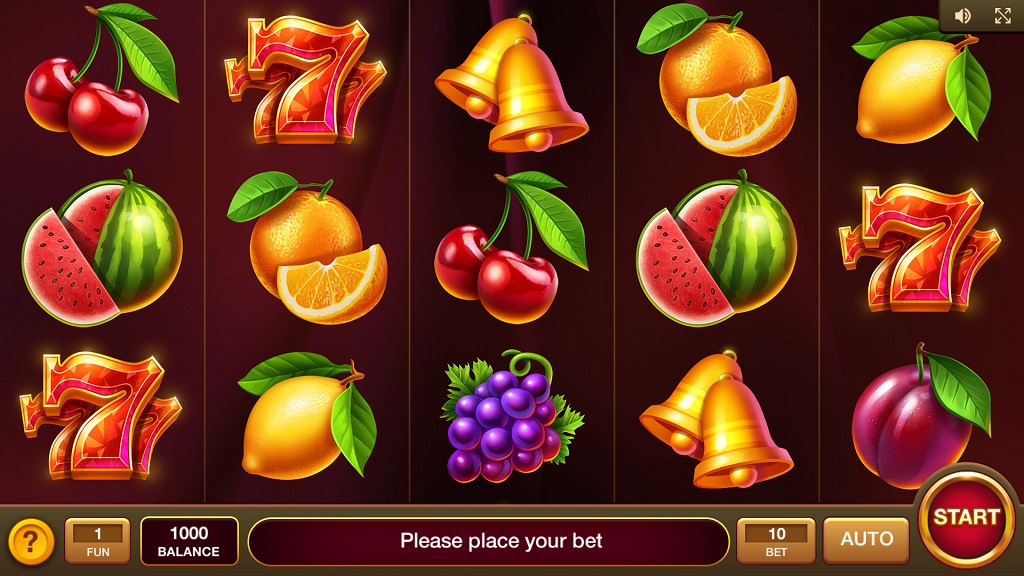
The live casino tables at Wincleo may not feature a standard paytable button, but the payout percentage is yet easy to locate. When I click on a live blackjack, roulette, or baccarat table, the lobby shows the specific variant and its rules, and the theoretical RTP is typically listed in the game rules or the help section that is accessible from the screen’s menu. Evolution, for example, offers a thorough help file for each live game that features the RTP for every wager type, so I can see that the banker bet in baccarat has a 98.94% return while the tie bet has a far lower percentage. Accessing this information during a live session allows me sidestep the sucker bets that look tempting but come with a heavy house edge. The transparency of the live casino environment, paired with the open dealing of cards and wheel spins, reinforces the trust I have in the declared figures.
Table Games: Employing Strategy to Boost Payout
Regarding the online table games at Wincleo, the RTP is typically listed in the rules section, but the number I see is commonly based on optimal play. This is a crucial distinction, because the actual payout I experience will depend on how well I follow the correct strategy. A blackjack game might have a theoretical RTP of 99.5%, but if I stand when I should hit or fail to split pairs correctly, my personal return will drop. Wincleo provides easy access to strategy charts for games like blackjack and video poker, either within the game interface or through linked resources, and I have found that spending a little time memorizing the basic plays is one of the highest-return investments I can make. The casino is not hiding the information; it is simply waiting for me to use it. When I combine the published RTP with disciplined strategy, I can effectively lock in the best possible payout percentage that the game was designed to offer.
Bonuses, Betting Requirements, and the Practical Payout Equation
The payout percentage of a game is only part of the financial picture when I am playing with a bonus, because the wagering requirement introduces a new layer of math that I must account for. A typical welcome offer at Wincleo Casino might provide me a deposit match and some free spins, but the bonus funds and any winnings derived from them are bound by a playthrough requirement that multiplies the bonus amount by a certain factor. For example, a 35x wagering requirement on a bonus means I have to place bets totalling 35 times the bonus value before I can withdraw anything. The house edge on the games I pick to clear the wagering will reduce my balance over that volume of play, and the effective payout I obtain from the bonus can be much lower than the RTP of the games themselves. I always estimate the expected loss from the wagering requirement and compare it to the size of the bonus to see if the promotion is valuable claiming. This is not about being cynical; it is about being mathematically informed so that I can use the bonus as a genuine boost rather than a trap that locks up my funds. Wincleo’s terms and conditions clearly specify the wagering multiplier and the game weighting percentages, and I make it a point to read them before I opt in.
How Wagering Requirements Alter Effective Payout
When I clear a bonus on a slot with a 96% RTP, the 4% house edge means that over a large number of spins, I can expect to lose about 4 units for every 100 units wagered. If I need to wager 3,500 units to clear a bonus, the expected loss from the house edge alone is 140 units, which might be bigger than the bonus itself. If the bonus is 100 units, the net expected value is negative unless I can find a way to cut the house edge. That is why I often choose blackjack or other high-RTP games to meet wagering requirements, provided the terms allow it and the game contribution is not heavily restricted. At Wincleo Casino, the bonus policy lists the contribution percentages for different game types, and I always check whether table games count fully or only a fraction of each bet. By selecting the most advantageous games and managing my bet sizes, I can tilt the effective payout equation closer to my advantage, or at least lessen the expected cost of the bonus play. This kind of analysis is what separates a player who simply hopes for the best from one who approaches the casino with a calculated strategy.
Bonus Terms That Affect Withdrawal
Aside from the wagering requirement, I pay close attention to the maximum bet limit during bonus play, the excluded games, and the time limit for completing the playthrough. These terms do not alter the payout percentage of a game, but they influence the real-world return I can achieve. If I inadvertently place a bet that exceeds the maximum allowed while a bonus is active, I could forfeit the bonus and any associated winnings, which quickly drops my effective payout to zero. At Wincleo, the bonus rules are presented in a dedicated promotions page, and I can also confirm the details with customer support if anything is unclear. I have developed a routine to screenshot or note down the key terms before I start playing, so that I am not tempted to bend the rules in the heat of the moment. When I adhere to the bonus conditions and align them with my knowledge of payout percentages, I can turn a promotional offer into a genuinely enjoyable extension of my playtime, rather than a frustrating exercise in fine print.
Payout percentages are not a confidential code reserved for insiders; they are a functional instrument that any player can use to make smarter decisions. By comprehending the relationship between RTP, house edge, volatility, and the exact terms of the games and bonuses, I have transformed the way I approach everything Wincleo Casino offers. I no longer see a slot reel as a basic spin of fate; I see a thoroughly audited mathematical model that I can assess before I commit my money. The next time I log in and browse the game lobby, I will check the RTP, take into account the volatility, and compare the bonus conditions against the expected return. None of this promises a profit, but it guarantees that I am not playing blind. Wincleo Casino gives me the transparency and the game variety to put this knowledge into practice, and I can always confirm the latest payout details directly on the site. The real lesson is that the house always has an edge, but that edge is a known quantity, and knowledge is the one thing the casino cannot take away from me.